History
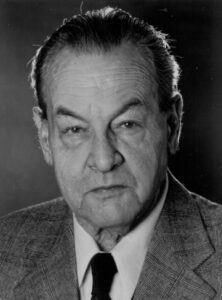
1959 | Founding of the engineering firm G. Trombik by Georg Trombik, graduate engineer ETH. From the outset, the company focused on structural dynamics, particularly the mounting of machine foundations. Georg Trombik developed and optimised the foundations, including spring foundations.
1962 | Commissioning of the first large spring foundation in Holland. Even at this early stage, the static and dynamic design, including the manufacture and delivery of the spring elements, was carried out as a complete solution, and today the company still offers a wide range of high-precision spring elements for high and extremely high loads in combination with machine foundation design.
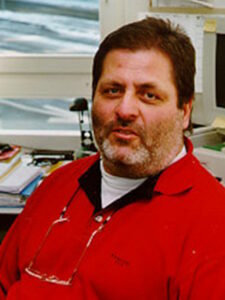
1979 | Peter G. Trombik, graduate engineer ETH/SIA/USIC, joins the company. In addition to general structural dynamics and the design and calculation of machine foundations, Peter Trombik developed and expanded the areas of vibration and noise phenomena of all kinds, as well as structural acoustics and structural physics.
1982 | Change of corporate form / into a public limited company: Trombik Engineers Ltd., based in Zurich.
1985 | Peter G. Trombik takes over the management of the company following the death of the senior partner. The company continues to make interesting contributions with its specialist presentations, particularly in the areas of structural dynamics, vibrations/structure-borne sound, machine foundations and elastic supports, and thus maintains an active membership in the professional associations SGEB, SGA-SSA and suisse.ing.
1998 | ISO certification: Since then, all services have been subject to a process-oriented quality management system in accordance with ISO 9001. This also includes the extensive range of top-quality measuring equipment for vibration, noise and structure-borne sound measurements, for building dynamics measurement campaigns (such as determining structural natural frequencies and structural dynamics stiffnesses), and for determining building acoustic parameters (including airborne and impact sound insulation measurements in accordance with SIA-181).
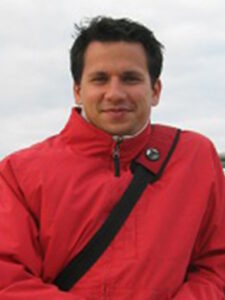
2000 | Pascal Fleischer, graduate engineer MSc/ETH/HTL/SIA, joins the company. In the new millennium, the company achieved success in the contemporary and practical application and implementation of structural dynamics expertise: Further development of machine foundations, including a “reinforced concrete drawer” for moving the generator, applications of permanent steel formwork for process-optimised construction of machine foundations, design and dimensioning design and dimensioning of elastic building supports, design and reinforcement of dynamically highly stressed bearing structures, and much more.
2011 | Peter G. Trombik receives the Structural Dynamics Innovation Award from the Foundation for Structural Dynamics and Earthquake Engineering. He, and thus indirectly his father Georg Trombik, receives the award ‘in recognition of outstanding services through practice-oriented solutions in structural dynamics for machine foundations, vibrations and elastic supports of all kinds’ (see also article TEC21, 2011).
2013 | Pascal Fleischer takes over as managing director, having already become a member of the management board in 2006. In the following years, he focuses on the field of structural dynamics, the expansion of the environmental field EKS (vibrations and structure-borne sound, mainly regarding railway systems) and on classic civil engineering. As specialists, he successfully worked on complex structures regarding structural dynamics, he developed the design and dimensioning of elastic layer for buildings and gained a foothold in laboratory construction as vibration experts.
2015 | Takeover of the company by Pascal Fleischer following the death of Peter G. Trombik.
2022 | Gabriela Gassner joins the company and becomes a member of the management board the following year. This is followed by an expansion of the measuring equipment pool, in particular vibration velocity sensors.The company now offers increased expertise in monitoring vibration emissions in sensitive facilities such as laboratories, hospitals, research and data centres.
2024 | ISO certification: Revision and recertification according to ISO 9001:2015. In the same year, the range of measuring equipment is expanded with the acquisition of a motion amplification camera, which makes it possible to visualize vibrations (from machines, motors, etc.) and display them visually on both time- and frequency-bases.